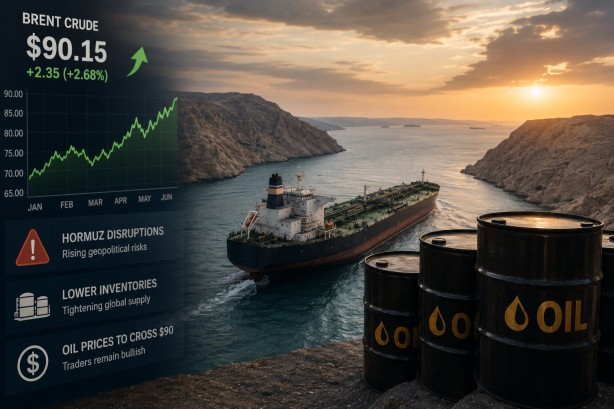
Oil prices have experienced their most significant weekly increase since April, with Brent crude trading close to $85 per barrel after an 11% rise over the week. However, analysts predict that prices will need a sustained disturbance in the Strait of Hormuz or evident signs of tightening global supplies to exceed $90 per barrel. Concurrently, the US benchmark, West Texas Intermediate, is nearing the $80 mark. The recent surge in prices is attributed to renewed tensions between the United States and Iran, which have impacted key Middle Eastern supply routes, leading to decreased tanker movement through the crucial Strait of Hormuz.
Despite the heightened regional tensions, Brent crude has struggled to surpass this week’s peak of $87.55 per barrel. Market analysts suggest that traders remain hopeful for diplomatic solutions to avert an extended crisis, which would support stability in the markets. The Strait of Hormuz is a focal point of concern for energy markets worldwide, as approximately 20% of global oil passes through this narrow passage. The current slowdown in tanker traffic has prompted shipping companies to keep a vigilant eye on the region’s security developments.
The ripple effects of these disruptions are already being felt across fuel markets. In the United States, refining margins have increased as diesel and gasoline supplies become tighter. Meanwhile, European fuel markets are also encountering growing pressures. Compounding these challenges are additional disruptions in Russian exports, which have further fueled apprehensions about the global supply chain.
Experts indicate that oil prices are unlikely to decisively break the $90 threshold unless there is a considerable drop in inventories or a significant escalation in tensions between Washington and Tehran. Such tensions could potentially lead to a prolonged disruption of shipping activities through the Strait of Hormuz, further impacting supply dynamics.
Currently, traders are closely monitoring diplomatic narratives and supply data, as these elements will be crucial in determining the next significant movements in global oil markets. As the situation unfolds, the focus will remain on whether diplomatic efforts can effectively mitigate the risk of prolonged regional turmoil and stabilize the crucial supply routes.