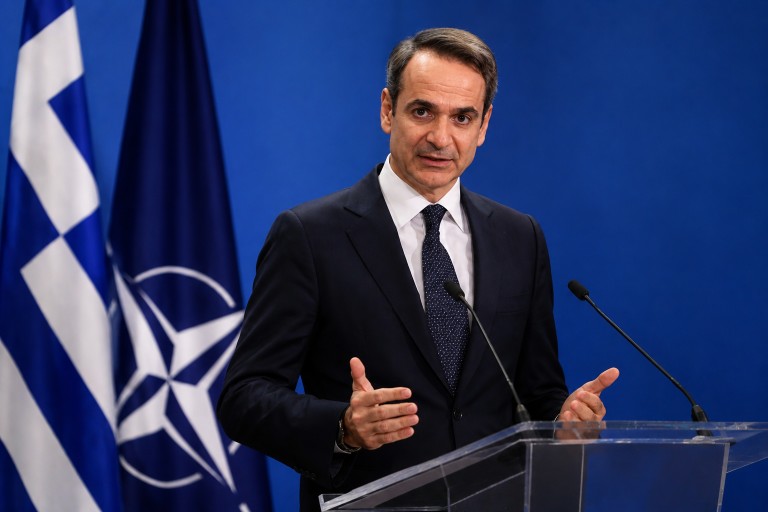
As discussions about defense cooperation with Türkiye unfold, Greek Prime Minister Kyriakos Mitsotakis refrained from making direct remarks on reports suggesting that the United States might restart sales of F-35 fighter jets to Türkiye. Instead, he underscored the importance for NATO allies to remain vigilant regarding regional security matters. This statement was made prior to the NATO summit scheduled in Ankara, where Mitsotakis reiterated Greece’s commitment to fostering improved relations with Türkiye through constructive dialogue and mutual cooperation as neighbors.
However, Mitsotakis emphasized that NATO must consider the security interests of all its member states, alluding to the enduring regional disputes. These tensions have historically involved issues such as the delineation of maritime boundaries and territorial claims in the Aegean Sea and Eastern Mediterranean—a focal point of contention between Greece and Türkiye, despite recent attempts to mend diplomatic ties.
The backdrop to Mitsotakis’s comments involves a recent move by US President Donald Trump, who indicated that the US might lift certain defense cooperation restrictions placed on Türkiye. This move could potentially include the sale of F-35 fighter jets and a relaxation of the sanctions imposed under the Countering America’s Adversaries Through Sanctions Act (CAATSA). Such developments have added a layer of complexity to the already intricate NATO dynamics, especially concerning Greece and Türkiye.
Despite ongoing diplomatic initiatives aimed at easing tensions, the issues of maritime sovereignty and territorial disputes remain unresolved between the two NATO allies. These concerns are central to the broader security landscape of the region, and Mitsotakis’s call for sensitivity among NATO members reflects the intricate balance that the alliance must maintain in addressing the interests and security priorities of its individual members.